Monday, 23 May 2011

"You told me you were 46!"

When a slightly mischievous (and very much younger, female) friend said this in a stage whisper in a shop recently, just after I’d told the elderly male shop assistant that I had retired a few years ago, it did make me smile; and it certainly made the shop assistant do a quick double take on the situation! But as Eric Morecombe might have said, “They’re the right numbers, they’re just in the wrong order” According to government figures 11 million people that are alive today in this country will reach the age of 100; so even 64 can hardly be classed as genuinely old can it? However maybe it is old enough to glance back; after all, there’s a lot to look back at!

I have been very lucky. I have never been unemployed. I have rarely been ill. I have always had supportive family and friends. There have been difficult times of course. Recessions aren’t new; I must have lived through at least four. Sometimes, when mortgage interest rates were in double figures, I had to do two jobs. Balancing a family with two young children, treble shift work, a second part time job, being a union rep and studying for an OU degree was never going to be other than exhausting. Looking back I’m not sure how we survived, but we did and we kept a roof over our heads. With the benefit of hindsight, would I do exactly the same again? The answer is that I don’t know. I would like to have been a better father, a better partner, a better friend, a better student. But as Kierkegaard said “Life only makes sense in retrospect, but we have to live it going forwards” You make your decisions as best you can at the time and you live with the consequences.


And so, suddenly I arrived at a kind of middle age. In a different job, infinitely more interesting, more rewarding in all kinds of ways but also more stressful; new friends and colleagues, new problems, new skills and the time flies and the years pass... and my children graduate and are adults.... and parents become frail and pass away. In this my life is doubtless the same as countless others, time passes, life moves on. And then, just when I think I am beginning to get this life thing sorted, some fool of a consultant tells me that I have cancer. “Don’t be daft I feel fine” “Well you won’t feel fine if you don’t get it treated” And so you do and it’s all OK again and then your job looks like transferring to London and the same genius of a consultant says “Don’t do it, that really won’t do you any good!”

So I retire early and that’s about where I am now, 5 or 6 years later. And it’s been a blast and it still is. I volunteer for a couple of conservation charities and in those years I’ve been frozen, sunburnt, soaked and bitten by unpronounceable insects in unmentionable places. I’ve broken an arm, cut my head open and fell in a moat and I wouldn’t have missed any of it for the world. I have a wonderful family and fantastic friends and, OK if just occasionally, I think I would give everything I have to be thirty years younger, I know that life, just as it is, is very good indeed.


Monday, 16 May 2011

Little Green Men.....

Wherever I go recently I seem to keep bumping into little Green Men! They aren’t hard to find. It may be best known as a pub name but, in fact, if you visit a medieval church you’re quite likely to see one or two gazing down at you from the roof or doorways as a piece of mysterious carving. Grotesque, leering, and sometimes quite frightening, there are over a thousand in Britain’s churches and they are still being discovered. Typically it will be a man’s face either surrounded by leaves, or with branches spewing from his mouth, or his eyes, ears and nose.

Why are they in so many of our churches? The truth is that no one really knows, but many of the traditions, images and practises of the early church were probably borrowed from pre-existing Pagan ritual. The candles, bells and holy water inside and yew trees outside our churches were all revered by pre Christian worshippers. Many Christian festivals, for example Easter, are on or close to Pagan feast days and religious festivals. This probably means that, like the empire building Romans, the new religion incorporated existing cultural traditions wherever it reasonably could. Rather than waste energy and goodwill trying to suppress them it brought them into the churches and made them safe and respectable.

It’s a little easier to make a guess at what they represent and why they were so important to people that they needed to be accommodated. If you can imagine a world without electricity and all our modern comforts, the winters would be cold and bleak and the one thing everyone would really, really look forward to would be Spring! Warmer weather, new plants growing, new animals born, fresh food! It’s not difficult to imagine that this would be a cause for huge celebration. The Green Man festival that I bumped into in Shropshire is always held on May Day, Beltane in the Pagan calendar, and the central event is the Green Man defeating the Ice Queen in battle and then, with help of the new May Queen, declaring winter ended. Only then can the feasting, the drinking and the dancing begin!


It would be strange if these festivals were the only examples of pre-Christian ritual to actually survive alive, as opposed to those spooky wooden carvings hidden in the dark corners of old churches. But of course they’re not. The Green Man has many other manifestations such as Jack of the Green, who dances in front of many May Day processions, John Barleycorn in song, Shakespeare’s Puck in theatre, and maybe even Robin Hood; all are bringers of liberation and celebration, mischief and misrule. There will always be more questions than answers about something as odd and as old the Green Men. But one thing seems certain, a symbol that is as widespread and long lasting is neither trivial nor merely decorative. So next time you visit a church why not have a good look at the roof bosses and the doorways and the pew ends; see if you can find him (occasionally her) and if you do find one, or even if you don’t, have a drink and toast his health at the nearest (Green Man) pub.


Wednesday, 4 May 2011

Borderlands, wolves and a green man.


When I think of Shropshire it's usually in terms of the area around Ludlow and the Malverns, those beautiful "blue, remembered hills" made famous in Housman’s poem cycle to a doomed English countryside, A Shropshire Lad. On a recent visit however the destination was further west, the borderland where England and Wales meet, merge and overlap.

Just getting there felt like an achievement. The last 5 miles from Bishop's Castle being a twisting single track road with high hedgerows and just a couple of passing places. The final half mile did straighten out but only because it was along a valley side with a 200 foot drop to one side. The final path down to the holiday cottage was about 1 in 5 with a hairpin bend thrown in. This was always going to be a holiday destination with a difference; remote, no TV and no mobile signal but, above all, chosen because it was in a wolf sanctuary!

It seems that we either love wolves or hate them. Those who hate them see wolves as vicious, dangerous and threatening. Those who love them perceive them as beautiful, intelligent, brave, co-operative – and free. No prizes for guessing which side I’m on and, if you’ve never come face to face with a wolf nor woken to their eerie howl at dawn, I recommend you put it on the “to do” list. Anyway, meet Kgosi.


Being dry, sunny and warm there was also a new landscape to explore. Rolling hills, forests, and lush valleys to get lost in; and, as neither I nor my best-est buddy can claim to be good navigators, there was some trespass involved. (Or our right to roam as we call it...but only because some misguided landowner had put up ‘Private’ signs where he shouldn’t.)  Limbs were stretched, muscles exercised and expletives uttered; especially when aforesaid buddy revealed that one walk was not 6 miles ....”ah, no, sorry, it says 8 miles over here... I didn’t see that”

Animals seen, not counting the wolves, were three red deer, two fallow deer, a hare, a grass snake, numerous buzzards, tawny owl (heard), yellow wagtails, nuthatch, yellowhammers, chiffchaffs, and numerous butterflies including the very rare wood white, oh and about a million sheep and lambs.


Purely by chance the village of Clun was holding its Green Man festival on our last full day in Shropshire. The Green Man tradition is one of our oldest surviving pagan customs. This is despite attempts to usurp it by sundry loons who think that having seen a Hobbit film, being able to find Glastonbury on a map and having a tattoo makes them pagans. Here were thousands of ordinary locals and visitors celebrating May Day and the arrival of summer. (OK there were a few loons...including one middle aged lady loon who had false Hobbit ears..honestly!)

In Clun May Day is marked by the Green Man entering the village and having to defeat the Ice Queen in a battle on the medieval bridge. No prizes for guessing who wins and the victory is marked by much dancing in the streets, drinking, eating and generally having a good time in the grounds of the ruined castle.
It was a great ending to a really enjoyable, and very different, few days.

Monday, 18 April 2011

Lets hear it for the Bronze Age, the Anglo-Saxons .....and even the Romans

I live in Higham Ferrers, Northamptonshire. If you drive through the county north/south on the A6 or east/west on the A45 you’ll pretty much pass the door. From your car you probably won’t notice anything remarkable.
And yet at the end of my street is the site of a medieval castle, walk a little further and there is the site of a 7th century Anglo Saxon tribute centre. Within a mile or two are a Bronze Age round barrow, two Roman Villa sites, the Roman town of Irchester and a scattering of abandoned medieval villages.  Why is it all here? Simply because we are just above the valley of the River Nene, formed 10,000 years ago at the end of the last ice age when the water from billions of tons of melting ice scoured out the valley as it forced its way east to the North Sea.
That process pretty much determined the future of this part of the country. The river valley was fertile, the river itself both a source of food and a way to get around. So, across the millennia, those Bronze Age chappies buried their warrior chieftains here, then the Iron Agers built their roundhouses, the Romans came and installed tiled bathrooms and central heating and, when they scuttled off back to the Med, the local medieval types had a go at town planning by building a few villages.
Then in 1349/50 the Black Death arrived and wiped out half of Europe. Whilst this was clearly a bad thing it did create a lot of job vacancies. Here in the Nene Valley villagers and farmers abandoned the poorer, boggy land in the valley bottom and moved up to newly vacant higher land along the ridges. In effect the valley was abandoned save for grazing, and nothing much was built there for the next 500 years. True, in 1845 the Northampton to Peterborough Railway was opened, having taken just 1 year to build 47 miles of track! But then, nothing; until the growth of 20th century road building created a huge demand for the sand and, especially, the gravel deposited all those years ago by the melting glaciers.
Gravel extraction, controversial at the time, has had two huge benefits. As part of the process, archaeologists were allowed to excavate prior to the gravel being removed. So, firstly, all the Bronze Age, Iron Age, Roman and Medieval remains mentioned here were discovered, recorded and where possible preserved. Secondly the gravel pits along the Nene Valley, once mineral extraction ended, are becoming havens for wildlife with the real prospect of a ribbon of connected reserves right along the valley between Northampton and Peterborough.
I am lucky enough to work as a volunteer in the Nene Valley and the mix of nature and history, archaeology and industry fascinates me. When the first Sand Martins fly back from Africa each year I’m sure that the Anglo Saxon children were as pleased to see them then, as we are now. When the first cuckoo calls, the Roman farmers knew as well as we do that Spring had arrived for sure. And when I walk around the sites of the abandoned medieval villages I am reminded that people just like me and just like you have lived, loved, worked and played in this landscape for thousands of years. 

Thursday, 7 April 2011

Testing, testing........

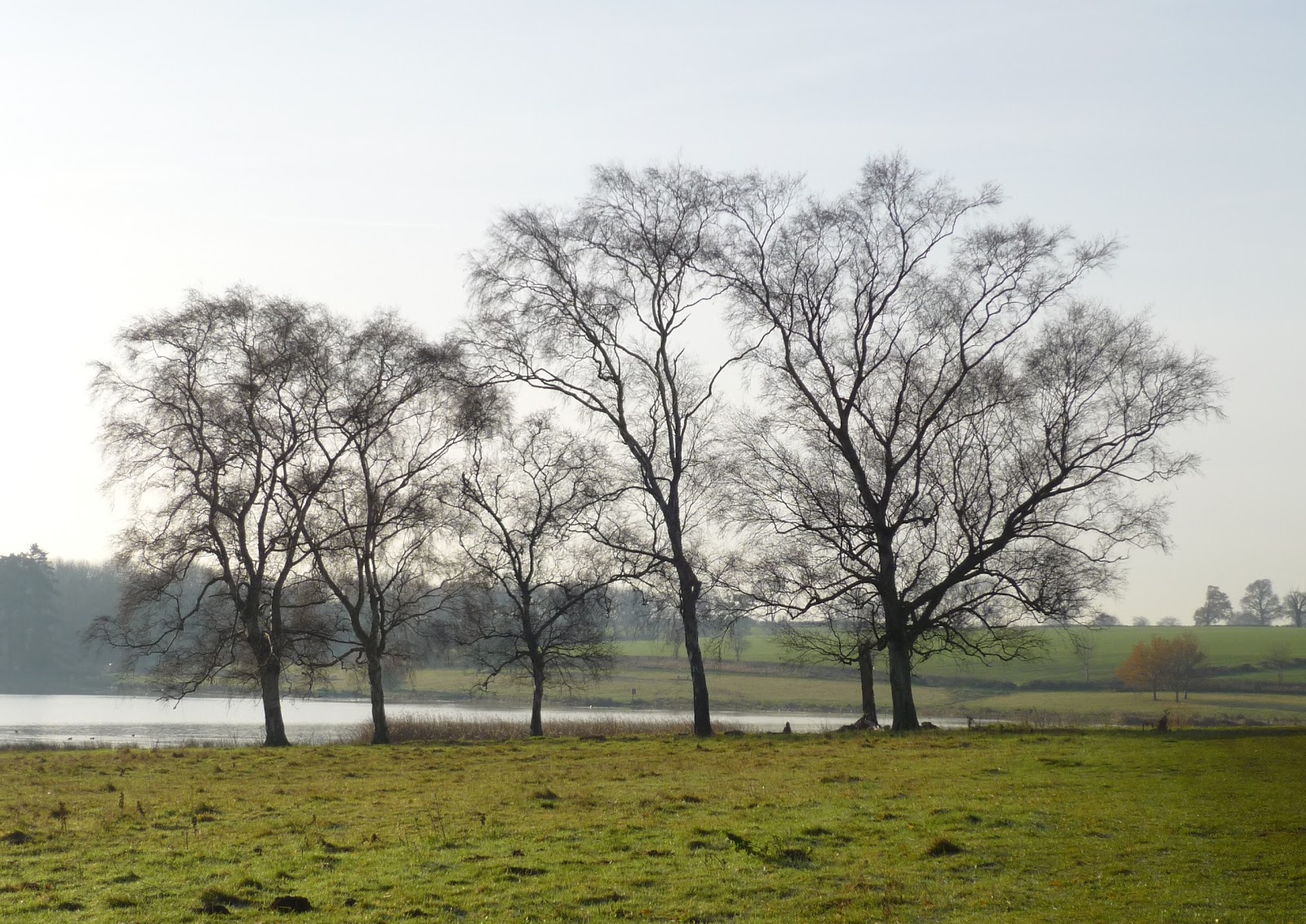
This is just a test for a new blog. I'm not really sure yet how any of this works but with spring finally arriving and some new projects coming along, I thought I might experiment a bit!! Anyway, it's always good to learn something new!
BTW I promise future pix will be more interesting!!