Wednesday, 4 May 2011

Borderlands, wolves and a green man.


When I think of Shropshire it's usually in terms of the area around Ludlow and the Malverns, those beautiful "blue, remembered hills" made famous in Housman’s poem cycle to a doomed English countryside, A Shropshire Lad. On a recent visit however the destination was further west, the borderland where England and Wales meet, merge and overlap.

Just getting there felt like an achievement. The last 5 miles from Bishop's Castle being a twisting single track road with high hedgerows and just a couple of passing places. The final half mile did straighten out but only because it was along a valley side with a 200 foot drop to one side. The final path down to the holiday cottage was about 1 in 5 with a hairpin bend thrown in. This was always going to be a holiday destination with a difference; remote, no TV and no mobile signal but, above all, chosen because it was in a wolf sanctuary!

It seems that we either love wolves or hate them. Those who hate them see wolves as vicious, dangerous and threatening. Those who love them perceive them as beautiful, intelligent, brave, co-operative – and free. No prizes for guessing which side I’m on and, if you’ve never come face to face with a wolf nor woken to their eerie howl at dawn, I recommend you put it on the “to do” list. Anyway, meet Kgosi.


Being dry, sunny and warm there was also a new landscape to explore. Rolling hills, forests, and lush valleys to get lost in; and, as neither I nor my best-est buddy can claim to be good navigators, there was some trespass involved. (Or our right to roam as we call it...but only because some misguided landowner had put up ‘Private’ signs where he shouldn’t.)  Limbs were stretched, muscles exercised and expletives uttered; especially when aforesaid buddy revealed that one walk was not 6 miles ....”ah, no, sorry, it says 8 miles over here... I didn’t see that”

Animals seen, not counting the wolves, were three red deer, two fallow deer, a hare, a grass snake, numerous buzzards, tawny owl (heard), yellow wagtails, nuthatch, yellowhammers, chiffchaffs, and numerous butterflies including the very rare wood white, oh and about a million sheep and lambs.


Purely by chance the village of Clun was holding its Green Man festival on our last full day in Shropshire. The Green Man tradition is one of our oldest surviving pagan customs. This is despite attempts to usurp it by sundry loons who think that having seen a Hobbit film, being able to find Glastonbury on a map and having a tattoo makes them pagans. Here were thousands of ordinary locals and visitors celebrating May Day and the arrival of summer. (OK there were a few loons...including one middle aged lady loon who had false Hobbit ears..honestly!)

In Clun May Day is marked by the Green Man entering the village and having to defeat the Ice Queen in a battle on the medieval bridge. No prizes for guessing who wins and the victory is marked by much dancing in the streets, drinking, eating and generally having a good time in the grounds of the ruined castle.
It was a great ending to a really enjoyable, and very different, few days.

Monday, 18 April 2011

Lets hear it for the Bronze Age, the Anglo-Saxons .....and even the Romans

I live in Higham Ferrers, Northamptonshire. If you drive through the county north/south on the A6 or east/west on the A45 you’ll pretty much pass the door. From your car you probably won’t notice anything remarkable.
And yet at the end of my street is the site of a medieval castle, walk a little further and there is the site of a 7th century Anglo Saxon tribute centre. Within a mile or two are a Bronze Age round barrow, two Roman Villa sites, the Roman town of Irchester and a scattering of abandoned medieval villages.  Why is it all here? Simply because we are just above the valley of the River Nene, formed 10,000 years ago at the end of the last ice age when the water from billions of tons of melting ice scoured out the valley as it forced its way east to the North Sea.
That process pretty much determined the future of this part of the country. The river valley was fertile, the river itself both a source of food and a way to get around. So, across the millennia, those Bronze Age chappies buried their warrior chieftains here, then the Iron Agers built their roundhouses, the Romans came and installed tiled bathrooms and central heating and, when they scuttled off back to the Med, the local medieval types had a go at town planning by building a few villages.
Then in 1349/50 the Black Death arrived and wiped out half of Europe. Whilst this was clearly a bad thing it did create a lot of job vacancies. Here in the Nene Valley villagers and farmers abandoned the poorer, boggy land in the valley bottom and moved up to newly vacant higher land along the ridges. In effect the valley was abandoned save for grazing, and nothing much was built there for the next 500 years. True, in 1845 the Northampton to Peterborough Railway was opened, having taken just 1 year to build 47 miles of track! But then, nothing; until the growth of 20th century road building created a huge demand for the sand and, especially, the gravel deposited all those years ago by the melting glaciers.
Gravel extraction, controversial at the time, has had two huge benefits. As part of the process, archaeologists were allowed to excavate prior to the gravel being removed. So, firstly, all the Bronze Age, Iron Age, Roman and Medieval remains mentioned here were discovered, recorded and where possible preserved. Secondly the gravel pits along the Nene Valley, once mineral extraction ended, are becoming havens for wildlife with the real prospect of a ribbon of connected reserves right along the valley between Northampton and Peterborough.
I am lucky enough to work as a volunteer in the Nene Valley and the mix of nature and history, archaeology and industry fascinates me. When the first Sand Martins fly back from Africa each year I’m sure that the Anglo Saxon children were as pleased to see them then, as we are now. When the first cuckoo calls, the Roman farmers knew as well as we do that Spring had arrived for sure. And when I walk around the sites of the abandoned medieval villages I am reminded that people just like me and just like you have lived, loved, worked and played in this landscape for thousands of years. 

Thursday, 7 April 2011

Testing, testing........

This is just a test for a new blog. I'm not really sure yet how any of this works but with spring finally arriving and some new projects coming along, I thought I might experiment a bit!! Anyway, it's always good to learn something new!
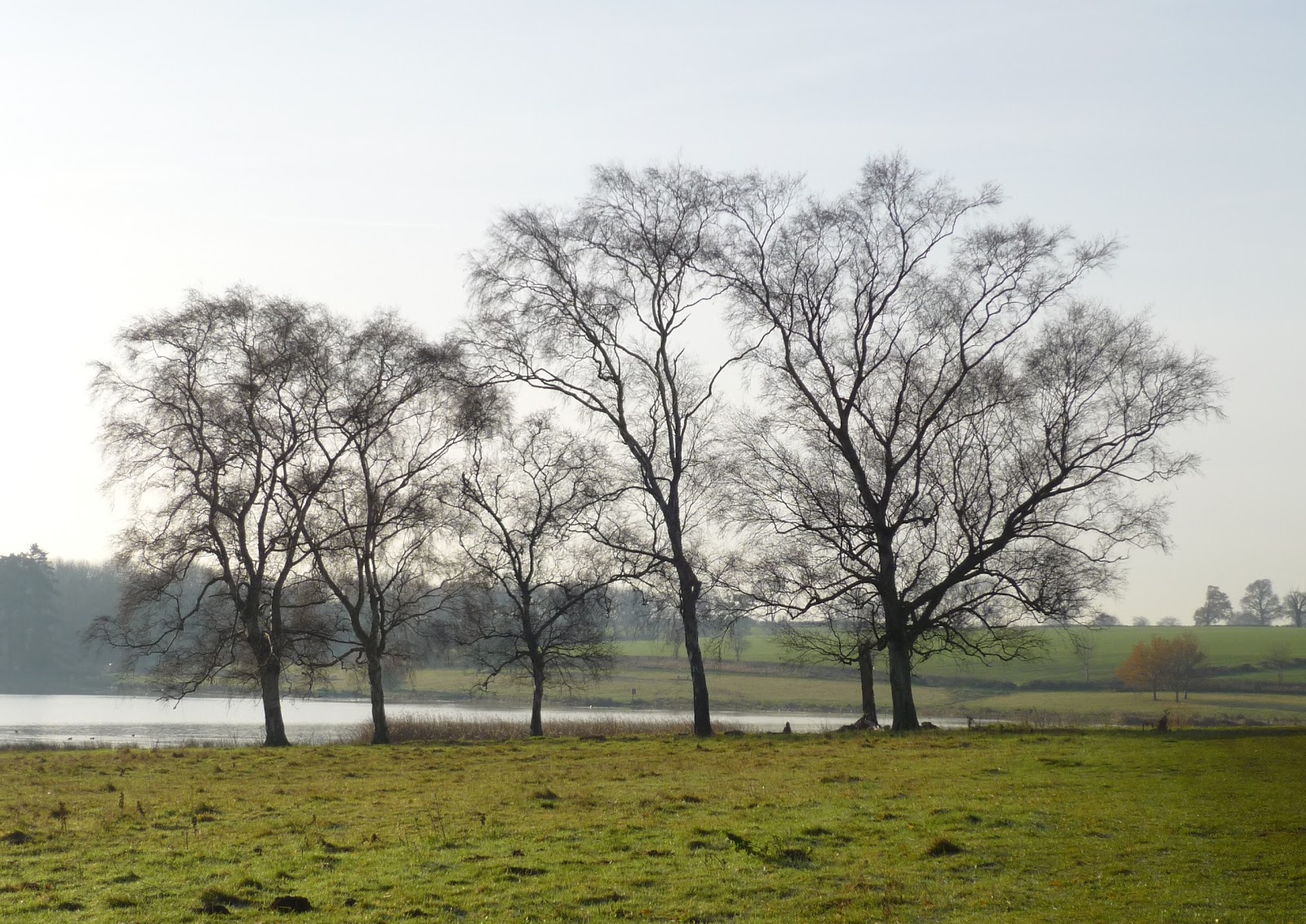
BTW I promise future pix will be more interesting!!